

Regulators and other government data collectors around the world need to collect data from companies for tax, company registration and for financial supervision. This data was, for a long time, exchanged in PDF documents or spreadsheets. However, these formats prove difficult to process at scale, and there is a need for filings that can be automatically read, validated, and analysed. This is why data collections increasingly require companies to submit financial and non-financial data in structured, machine-readable digital formats.
The move to digital regulatory reporting is a significant change in how information is collected. It can affect thousands or millions of companies and requires significant changes on the collection side too. In many cases, digital reporting is already well established. For example, UK Corporation Tax returns have been filed electronically using structured data since 2011, while listed companies across EU-regulated markets submit annual reports in the European Single Electronic Format (ESEF).
Regulatory reporting continues to evolve. Requests for more granular data are becoming more common, while the scope of reporting is expanding beyond financial information to include sustainability and other non-financial disclosures. Yet the core objective remains the same: communicating timely and accurate information. Together, these developments form the landscape of digital regulatory reporting today. This guide explains what digital regulatory reporting is, why it matters, and how standards such as XBRL and iXBRL make it work in practice.
What is digital regulatory reporting (DRR)?
Digital regulatory reporting is the submission of business data to regulators, registries and tax authorities in a structured, machine-readable format. In practice, that means every figure and disclosure in a filing carries a tag that tells software exactly what it represents.
For companies, DRR enables reporting workflows where software can be used to assemble, validate and deliver data to the regulator in the required form. This increase in automation and efficiency acts to reduce the reporting burden felt by firms.
Regulators gain just as much on their side. Every filing arrives as clean, consistent, high-quality data, ready for immediate processing at a scale no team of human readers could match.
An open and free standard called XBRL, short for eXtensible Business Reporting Language, makes this possible. XBRL gives every tag a precise, agreed-upon, machine-readable meaning stored in an XBRL taxonomy. By referencing the taxonomy, a figure tagged as “Revenue” reads the same way every time to everyone, whether preparing, validating or using the data.
Digital regulatory reporting vs document-based reporting: What changed?
The clearest way to see the change is to follow one filing through the process. The first ever iXBRL data collection was put in place by the UK’s tax authority (HMRC). A UK Corporation Tax return once travelled to HMRC on paper or as a PDF, and someone at the tax authority read it and analysed the figures by hand or by rekeying into analysis software. The same return today arrives as a tagged iXBRL file that HMRC’s systems process automatically.
The table below shows how activities differ when working with documents or digital:
| Stage | Document-based reporting | Digital regulatory reporting |
| Preparation | The finance team lays out the accounts as a document for a human reader | The same layout is used and software maps each figure and disclosure to a tag with an agreed meaning |
| Submission | Paper or a PDF, one flat document | A tagged, machine-readable file in the required format |
| On arrival | An official reads the filing and rekeys the numbers | The regulator’s systems read, validate and store every figure automatically |
| Error checks | Mistakes come to light late, often through a query or a rejection | Validation runs before submission, so most errors never reach the regulator |
For the preparer, the core work of calculating and preparing disclosures remains the same, but the final output changes from a document designed only for human readers to one that is also tagged for machine processing. For the data collector, instead of manually extracting and checking information from submitted documents, systems can automatically read, validate and store the data as soon as it is received.
Overall, digital regulatory reporting shifts regulatory data exchange from documents that must be interpreted by people to structured data that can be processed automatically by software.
Why regulators and financial institutions are moving to digital reporting?
The adoption of digital reporting is typically driven by government agencies and regulators that need reliable data to carry out their responsibilities. They must collect, review and analyse information from large numbers of organisations, often without a corresponding increase in resources. Digital reporting removes many of the limitations of document-based reporting and manual processing. Below are some of the key areas where it delivers improvements.
Consistency: There are often difference in the way companies lay out a report, so the same fact can end up being collected in a thousand different shapes, and someone has to standardise it all before analysis can start. Even with Excel-based forms of the type used by financial regulators, firms may inadvertently introduce changes or do things differently in a way that hinders processing. A digital filing shows up consistent, comparable and already checked against the reporting rules with no need to try to interpret what is being reported.
Volume: Taking the UK’s FCA as an example, they receive around 500,000 records every year and supervise more than 50,000 firms. Is is simply not possible to staff a department large enough to read them all. As long as the filings arrive in a machine-readable form, they can all be processed properly. Even for regulators with much smaller numbers of supervised firms, staff time is precious and, with digital reporting, can be directed towards high value tasks.
Overview of the whole market: Structured data means that sampling is not required and a supervisor can view the whole market through the data. It also enables the collection and processing of more granular data, providing insights that are not possible with aggregated information. This means problems that once stayed hidden in filing cabinets come into view while there is still time to act and before individual stress points grow into systemic risk.
These same factors apply to every small and large regulator around the world. With digital data, corporate registries, stock markets and securities regulators can ensure the required level of corporate transparency. Tax offices can ensure that tax rules are applied across the full population. Similarly, financial regulators can effectively and fairly supervise all financial institutions within their jurisdiction.
The technology behind digital regulatory reporting: XBRL and iXBRL
XBRL is a popular standard used for digital regulatory reporting, its focus on long term data integrity sets it apart from other formats where the meaning of a report or individual figure can become lost or ambiguous over time.
In XBRL, every figure in a report carries a tag that identifies exactly what it represents. This tag contains detailed information about the entity, reporting period, currency, precision and meaning of the reported value. The meaning of each tag is defined in a shared dictionary known as an XBRL taxonomy. This enables a software to automatically read a filing and compare data across organisations without the need for interpretation.
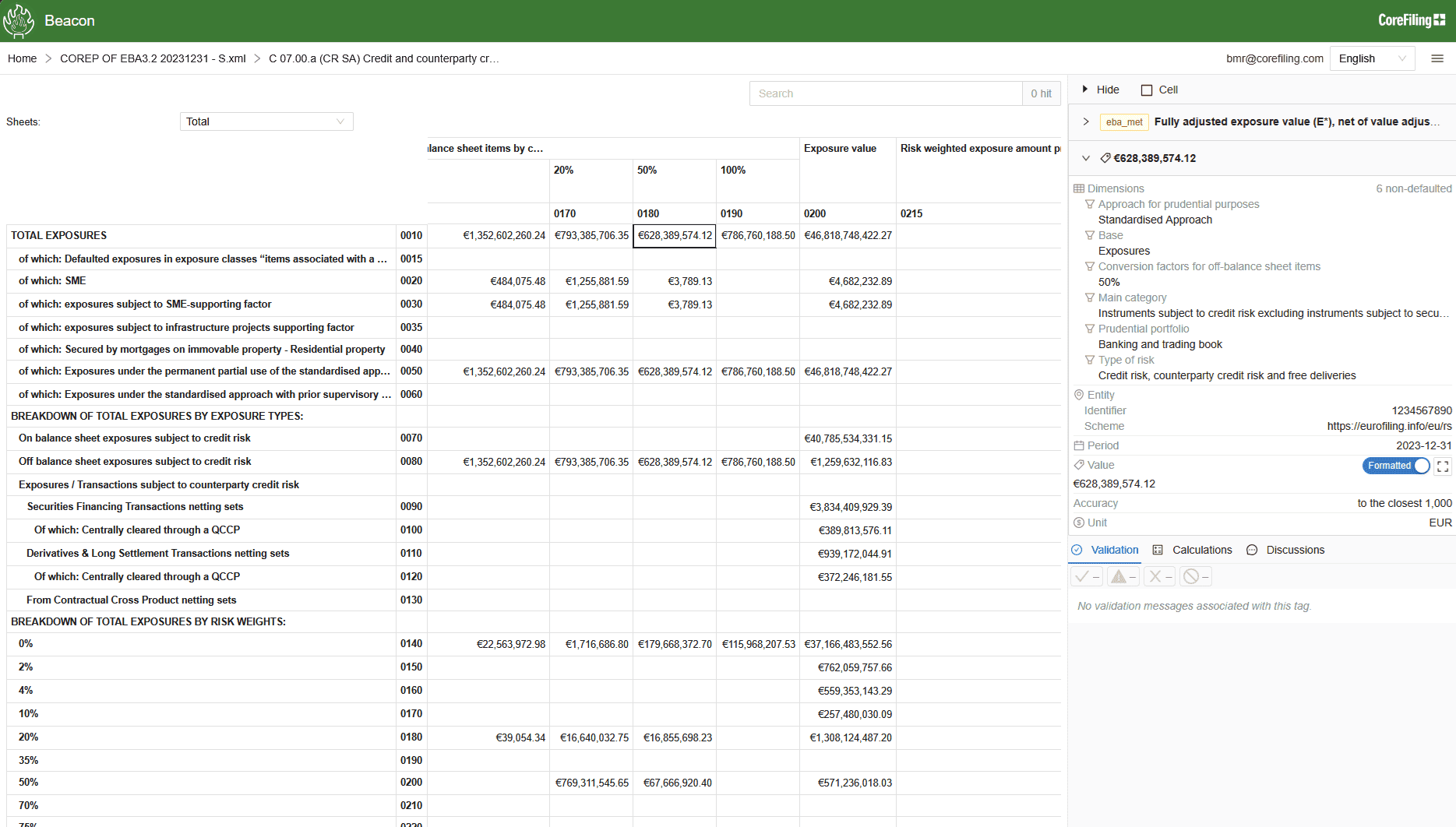
XBRL on its own produces a data file, useful for machine-to-machine submission using XML, CSV or JSON-based files, inline XBRL (iXBRL) includes the tags within an ordinary HTML document. In iXBRL, one file then serves two audiences: a formatted report a person opens in a browser, and structured data a regulator’s systems process automatically.
More detail and introductory videos on the standards are on the About XBRL and About iXBRL pages.
How iXBRL tagging works in practice?
iXBRL is the de facto standard around the world for digitising PDF reports and for good reason. Corporate reports are not just sets of figures, they are a major communication tool for companies to inform a large variety of stakeholders about their financial and non-financial position. iXBRL is a fully digital format that maintains the layouts, graphics and narrative usually only found in PDF reports. In fact, while most iXBRL reports are generated directly from accounting software, many start as PDFs and are converted to their digital format through a process known as “tagging”.
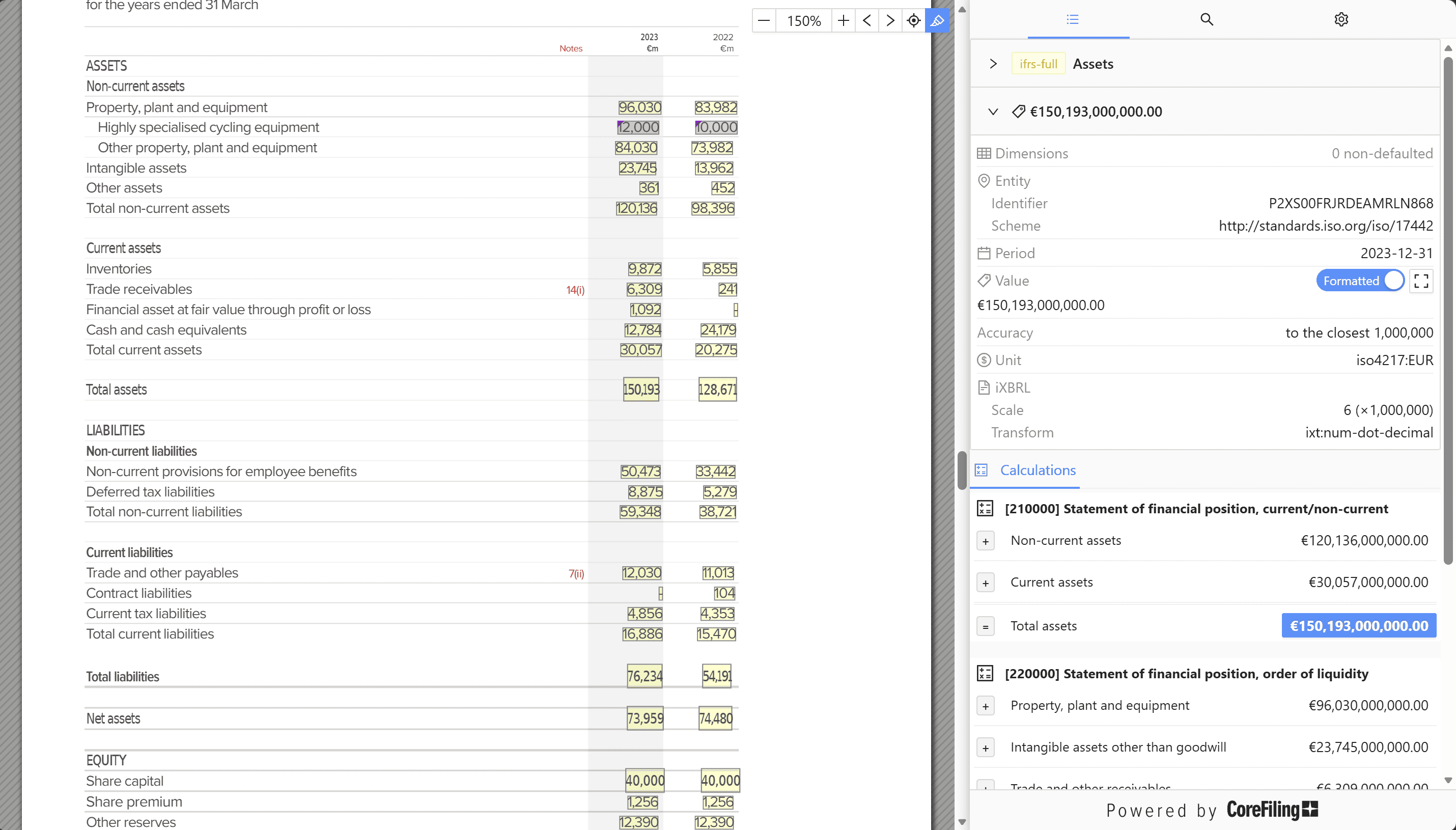
Tagging starts after the report is finished. The report is loaded into specialist software that converts to HTML and helps to match each figure and disclosure to a concept in the relevant taxonomy, applying this selection as a tag. Your revenue line links to the IFRS concept for revenue, a lease note links to the concept for that disclosure, and the process repeats down the whole document.
What you end up with is the same report in iXBRL format, nothing rewritten, nothing moved, just a machine-readable label behind every visible data point. This extra work pays off when the reports are consumed, either by a regulator or by the public. Their systems extract tagged values and can compare extracted figures with thousands of other submissions.
Examples of digital regulatory reporting mandates
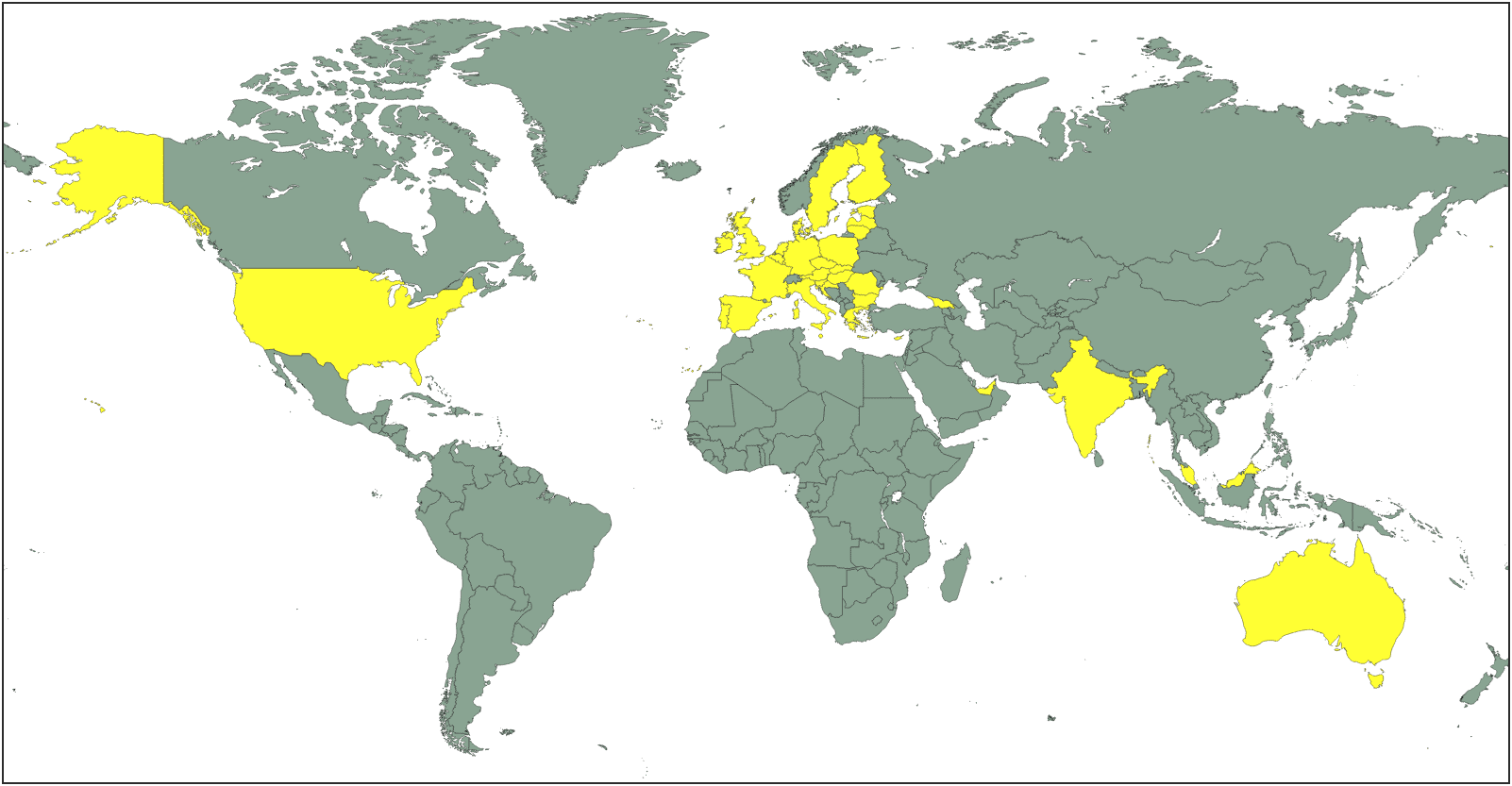
This guide mentions a few digital data collections already, some further examples are given below. This list is still only a small snapshot of global XBRL and iXBRL implementations.
HMRC and Companies House: UK Corporation Tax and statutory returns
Who it covers: This dual-filing regime covers every UK company that files a Corporation Tax return or is registered with Companies House, which in practice means all five million of them.
HMRC and Companies House implemented the requirement in 2011, and it is the oldest and largest iXBRL mandate that exists. HMRC collects accounts and tax computations tagged against the FRC’s UK GAAP or IFRS taxonomies, in most cases, the same tagged accounts are used to meet Companies House statutory filing requirements.
ESEF: Annual financial reports for EU-listed companies
Who it covers: every company with securities listed on an EU-regulated market, wherever it is headquartered.
ESMA implemented ESEF, the European Single Electronic Format, for financial years starting on or after 1 January 2020. The annual financial report goes out as an XHTML document with iXBRL tags, built on the IFRS taxonomy plus extension tags for company-specific lines.
UK capital markets kept the model after Brexit. UK-listed companies file UKSEF, a variant maintained by the FRC and collected by the FCA. ESEF reporting requirements cover the mandate in full.
EDGAR: Digital reporting to the US Securities and Exchange Commission
Who it covers: every company that files periodic or registration reports with the US Securities and Exchange Commission (SEC), including domestic issuers and most foreign private issuers.
The SEC began requiring XBRL-tagged financial statements in 2009 and expanded the requirement to all public company filers over the following years. In 2018, the SEC adopted Inline XBRL (iXBRL), allowing companies to publish a single filing that is both human-readable and machine-readable through the EDGAR system.
Financial statements are tagged using US GAAP or IFRS taxonomies, together with SEC-specific disclosure taxonomies where applicable. Today, iXBRL is used across a wide range of filings, including annual and quarterly reports, registration statements and numerous other structured disclosures.
EDINET: Securities reports and disclosures in Japan
Who it covers: every company, fund and issuer required to submit securities reports under Japan’s Financial Instruments and Exchange Act, including all companies listed on Japanese stock exchanges.
Japan’s Financial Services Agency (FSA) operates EDINET, the Electronic Disclosure for Investors’ NETwork. The system introduced mandatory XBRL reporting for financial statements in 2008 as part of the “New EDINET” programme.
Annual securities reports, quarterly reports and registration statements contain XBRL-tagged financial information based on the EDINET taxonomy. The mandate has created one of the world’s largest structured regulatory databases, providing investors and regulators with direct access to machine-readable corporate disclosures.
SEBI: Listed company disclosures in India
Who it covers: companies listed on Indian stock exchanges, alongside other entities that fall within specific XBRL reporting requirements established by securities and corporate regulators.
The Securities and Exchange Board of India (SEBI) has progressively expanded XBRL reporting through its Listing Obligations and Disclosure Requirements (LODR) framework. Listed companies submit a growing range of disclosures in XBRL format, including shareholding information, corporate governance reports and financial results.
India’s broader digital reporting landscape also includes XBRL filings to the Ministry of Corporate Affairs, creating a substantial ecosystem of structured corporate reporting. Together, these requirements support automated regulatory monitoring, market transparency and analysis across one of the world’s largest capital markets.
EBA Reporting Frameworks: Prudential and supervisory reporting in the European Union
Who it covers: banks, investment firms and other regulated financial institutions that report prudential information to national supervisors and the European Banking Authority (EBA).
The EBA has used XBRL for supervisory reporting since the introduction of its harmonised reporting frameworks under the Capital Requirements Regulation and related legislation. These frameworks standardise reporting throughout the European Union and are implemented through regularly updated taxonomies and Data Point Models (DPMs).
Institutions submit highly granular data covering areas such as capital adequacy, financial performance, liquidity, leverage, resolution planning and ESG-related metrics. The EBA reporting architecture remains one of the most sophisticated regulatory XBRL implementations globally and forms the backbone of European banking supervision.
Indonesia Stock Exchange (IDX): Financial reporting by listed companies
Who it covers: companies listed on the Indonesia Stock Exchange (IDX).
The Indonesia Stock Exchange implemented XBRL to modernise how listed companies submit financial reports and to improve the quality, comparability and transparency of capital markets data. Reporting is based on an IDX taxonomy developed specifically for Indonesian listed company disclosures.
Initially focused on primary financial statements, the programme has since expanded to include notes to the financial statements and other disclosures. Structured reporting through IDX provides investors, regulators and data providers with access to consistent, machine-readable information across the Indonesian market.
ADGM: Regulatory reporting in Abu Dhabi Global Market
Who it covers: financial services firms regulated by the Financial Services Regulatory Authority (FSRA) within Abu Dhabi Global Market (ADGM), including firms subject to prudential reporting requirements under the FSRA rulebook.
The FSRA collects regulatory returns through the Electronic Prudential Reporting System (EPRS), a dedicated portal used by regulated firms to submit supervisory and prudential data. The platform supports ongoing regulatory reporting and provides firms with visibility of upcoming filing obligations.
EPRS includes reporting frameworks prepared in XBRL format, with reporting modules determined by a firm’s prudential classification and regulatory obligations. The system enables consistent, structured collection of capital, financial and risk information, supporting the FSRA’s supervision of firms operating within ADGM.
The benefits of digital regulatory reporting
The benefits of DRR are tangible and measurable:
-
Reduce filer burden: It has been estimated that UK firms spend between £1.5 billion and £4 billion a year on regulatory reporting and these kind of figures are not unusual for national data collections. While creating a digital filing accounts for only a small share of that cost, structured, machine-readable reporting creates opportunities for automation throughout the reporting process. It enables software to reuse data, perform validation automatically and streamline filing workflows, helping to reduce effort, errors and compliance costs over time.
-
Lower cost data: For regulators, government agencies and other data users, the cost savings from digital reporting can be substantial. Structured, machine-readable data eliminates the need to manually extract information from PDFs and spreadsheets, making large-scale analysis, supervision and data sharing far more efficient. Data that was once expensive to obtain and process can be integrated directly into analytical systems and workflows.
-
Fewer errors: Software can validate reports before submission, checking calculations, data quality and compliance with the regulator’s filing rules. As a result, many errors are identified and corrected before a filing is submitted, improving data quality and reducing rejections and follow-up queries.
-
Comparable data: Digital reporting makes data comparable by giving each reported fact a standard, machine-readable meaning. Regulators, investors and analysts can use these definitions to automatically compare companies, without further processing. International taxonomies such as the IFRS Accounting Taxonomy and the IFRS Sustainability Disclosure Taxonomy extend this consistency across borders and reporting frameworks.
How CoreFiling enables digital regulatory reporting (DRR)?
CoreFiling have a long track record of helping organisations move to digital reporting using XBRL technology. This includes inventing the iXBRL format that is now the standard for digital collection of formatted corporate reports. We continue to edit the standards and write official best practice, and convert this knowledge into solutions throughout the digital reporting ecosystem.
Our flagship software is the True North Data Platform which captures the XBRL standards, makes them easy to work with and contains our custom AI. On top of the platform are apps used at key points in the digital data supply chain. Software is backed by services to run major DRR projects, write taxonomies and provide consultancy support.
-
Our external reporting solutions help filers to be 100% compliant across multiple jurisdictions.
-
Our data collection solutions help regulators set up, run and maintain DRR programmes.
-
Our audit solutions extend the standard review capabilities for formal audit of digital reports.
-
Our XBRL developer tools make it easy to integrate powerful XBRL processing in your software.
All our solutions are backed by 100% compliance to the XBRL standards, built into the platform’s core and ensuring the maximum compatibility with other filer and regulator solutions. Our work around the world brings global experience that is otherwise simply not available to national projects.
Whether you are introducing a new digital reporting requirement or responding to one, CoreFiling can help. Contact us to discuss your digital regulatory reporting and XBRL requirements.
Frequently Asked Questions: Digital Regulatory Reporting
What is digital regulatory reporting?
Digital regulatory reporting is the submission of financial, sustainability and other business data to regulators, registries and tax authorities in a structured, machine-readable format.
XBRL and iXBRL enable digital reporting by attaching a tag to every figure, so software can read, validate and analyse a filing automatically. These are mature global standards, successfully deployed by regulators, tax authorities and reporting organisations in jurisdictions around the world.
What makes digital reporting "digital"?
Digital reporting is more than sending a report electronically. The key difference is that the data is structured and machine-readable, with XBRL tags that identify the meaning of each reported fact. This allows software to process and validate filings automatically, reducing the need for manual extraction and interpretation. The information remains the same; only the format changes.
What is XBRL and how does it relate to digital regulatory reporting?
XBRL (eXtensible Business Reporting Language) is an open standard that makes digital regulatory reporting possible. It gives every reported fact a machine-readable tag with an agreed meaning, allowing software to process filings automatically.
Some reporting requirements, such as returns for banking or insurance, use XBRL directly. Others, including annual reports and tax filings, use iXBRL, which combines a human-readable document with embedded XBRL tags. The post on XBRL vs iXBRL: key differences further compares the formats and where they are used.
What software do data collectors use for digital regulatory reporting?
Regulators and other data collectors typically need software for five core functions:
-
Taxonomy development: Creating and maintaining the reporting taxonomy and filing rules.
-
Filing portal: Receiving submissions and communicating directly with filers.
-
Validation: Checking filings against XBRL specifications and collection-specific business rules before data is accepted.
-
Data storage and access: Storing submitted data and making it available for supervision, analysis, publication or onward distribution.
-
Analytics and integration: Connecting regulatory data to internal systems, dashboards and analytical tools.
These capabilities may be delivered through a combination of specialist tools or a single integrated platform. CoreFiling’s True North Data Platform provides solutions covering each stage of the digital reporting lifecycle.
What software do companies use for digital regulatory reporting?
For supervisory and statistical reporting (in plain XBRL), software either provides straight-through reporting or is template-based. Software choices handle changes brought about by ongoing data-standardisation and simplification initiatives as well as new filing formats (such as xBRL-CSV).
For financial and non-financial statements, companies use specialist tagging and filing software, stand-alone or built into their accounts tools.
CoreFiling’s Seahorse SaaS helps organisations create and submit accurate XBRL and iXBRL filings, while the True North Data Platform supports validation, review and audit workflows. Together, they provide end-to-end support for digital regulatory reporting.