

Regulatory reporting has always depended on rules, definitions and data that can be traced back to its source.
AI adds a new layer to that process. Large language models and machine learning can suggest tags, map data and identify unusual patterns. Furthermore, generative AI can help analyse disclosures and prepare first drafts of narrative content.
These capabilities become much more effective when the underlying information already has a defined structure. XBRL gives each reported fact a machine-readable value, connects it to a regulatory taxonomy and provides rules that software can validate consistently.
This guide looks at how AI is being used across the reporting process, where it can genuinely reduce manual work, and where XBRL and human judgement cannot, or should not, be replaced.
Why XBRL Is the Structured Data Layer AI Regulatory Reporting Needs
AI regulatory reporting is the use of AI to help prepare, validate, analyze and review regulatory filings. It works best when reporting data is structured such that the system understands exactly what each fact means. Handling regulatory reports requires more than extraction of a number: a system needs to know what a figure represents, which period it covers, how it relates to other facts and which reporting definition applies.
An XBRL report linked to an XBRL taxonomy encodes all this context and gives AI a stronger starting point for analysis. This elevates the use of AI from generic document processing to delivering solution that support compliance work, improve data quality, accelerate review and enable deeper analytics.
This article looks at how AI can make use of XBRL in regulatory reporting and outlines the move toward AI-ready reporting pipelines.
Machine Learning Needs Clean, Machine-Readable Data
A PDF may be perfectly clear to a person and still leave software with a lot to work out. A model has to identify the right table, separate labels from values, understand dates and units, and decide whether similarly worded disclosures represent the same concept.
XBRL removes any ambiguity or interpretation. Reported facts are linked to machine-readable tags and information such as the reporting entity, period and unit. Inline XBRL adds this structure directly to the human-readable report.
The SEC highlighted the iXBRL advantage in its June 2026 report on machine-readable corporate disclosures. Its staff noted that machine-readable data includes contextual metadata that is useful for AI and machine learning, and cited research where structured inputs reduced errors and improved LLM performance on financial tasks.
Cleaner input does not guarantee a correct AI output, but it gives the model less information to figure out for itself.
How An AI Can Use An XBRL Taxonomy
The meaning of any given tag in an XBRL report is described in detail in an XBRL taxonomy. XBRL taxonomies are rich mines of information about reporting concepts and include labels, references to accounting or regulatory requirements, relationships between concepts and validation rules.
That metadata gives an AI system useful context around the reported fact.
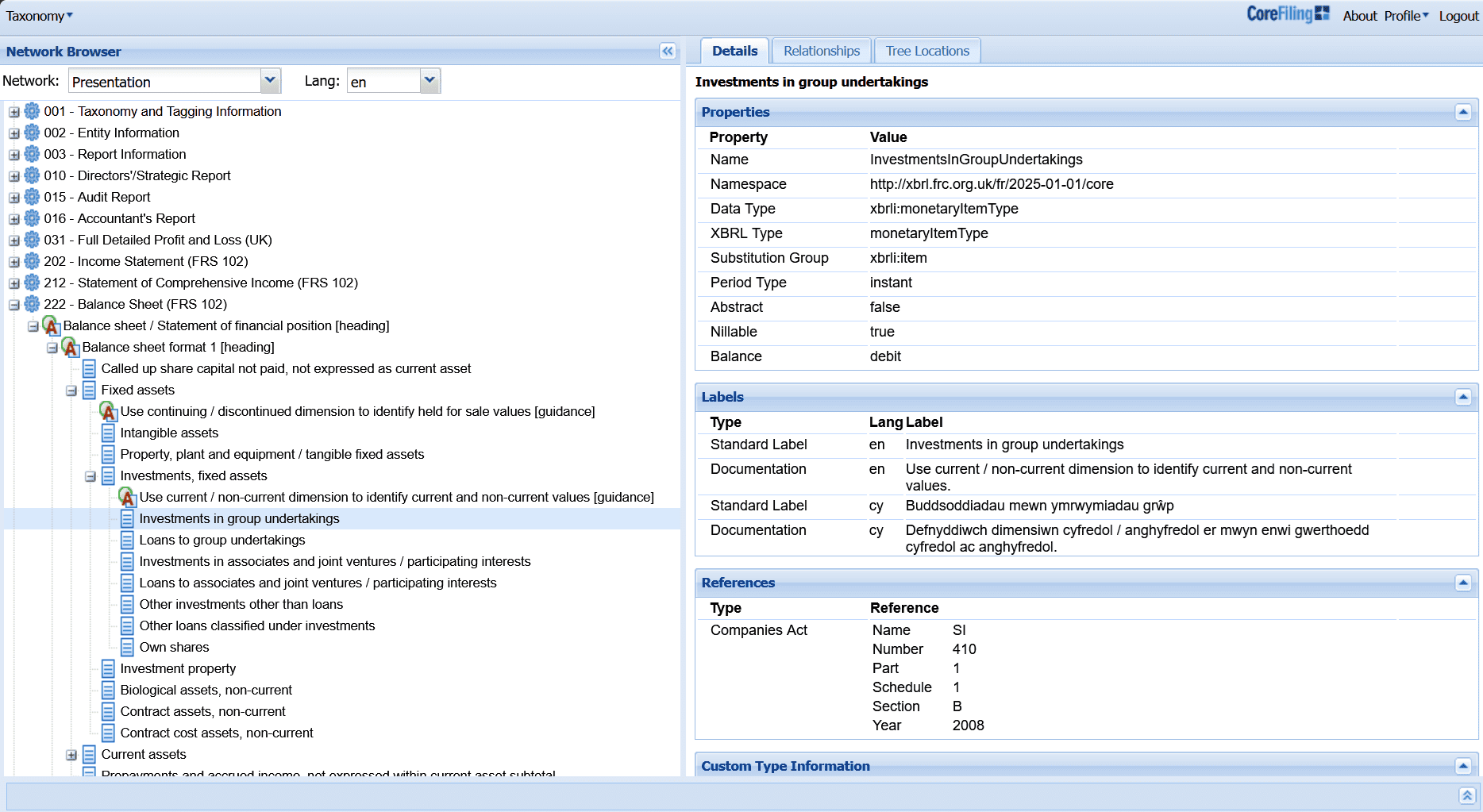
Example of some of the structure and definitions contained in an XBRL taxonomy.
Suppose a model sees two figures labelled “revenue” across different companies. Text alone may not reveal whether they represent the same accounting concept. The taxonomy can identify the precise concepts used, their definitions and how they relate to other items in the statements.
XBRL International has tested this approach with LLMs and found that structured XBRL data combined with taxonomy metadata produced more accurate and focused analysis than unstructured PDF inputs.
The taxonomy also helps the model trace a disclosure back to the relevant accounting definition instead of relying on nearby text or wording alone.
Why “AI-Ready” Regulatory Data Starts with XBRL
XBRL provides a report definition layer, linked to reported data, that AI can consume without first reconstructing the meaning of the data.
Taxonomy authors describe the report and each item in detail, regulators publish the taxonomy as a reporting requirement, companies link their disclosures to the definitions, and validation software checks whether the report follows them.
The same structured data can also sit behind AI interfaces. The SEC has pointed to Model Context Protocol servers that connect AI applications to XBRL data and support natural-language questions across structured filings. A user could ask for a comparison across companies or periods and the system does not need to start with unstructured PDF documents, rather it can directly retrieve the relevant facts from the XBRL dataset.
This is equivalent to having perfect data extraction and indexing from PDF documents and provides a much stronger foundation than asking a model to scrape individual PDFs.
How AI Is Being Applied For Regulatory Report Preparation
Current adoption is concentrated in parts of reporting where software can reduce manual effort without taking ownership of the final judgement. In the financial services industry, that pattern is especially relevant for financial institutions, and 53% of financial institutions expect Generative AI to impact compliance. That includes data preparation, mapping, anomaly detection, validation support and first-draft narrative work.
Data Ingestion and Mapping from Legacy Systems
Regulatory data rarely begins in one clean system. A filing may draw from the general ledger, ERP solutions, spreadsheets, consolidation software and specialist systems, with reporting data often pulled from multiple systems and carrying different names or structures for the same information.
Machine learning can help with the first pass. A model can compare field names and descriptions, use previous mappings and suggest where a source field belongs in the target reporting model. Teams can then review the proposed mapping before it becomes part of the controlled reporting process.
This can reduce manual processes in data preparation and mapping when a new filing regime arrives or when an organisation has several legacy systems.
AI still depends on the source data being available and trustworthy. Missing data definitions, inconsistent account codes or poorly maintained master data cannot be repaired reliably through prediction alone. Once a mapping has been approved, repeatable transformation and validation rules remain important so the same input produces the same regulatory output.
Anomaly Detection and Automated Validation
Validation and anomaly detection solve related, but different problems.
A validation rule checks something the reporting framework already knows. If a required field is missing, a calculation fails or a value violates a defined business rule, software can return a deterministic error.
Machine learning can look for patterns that nobody has explicitly encoded as a rule. AI models can strengthen compliance monitoring by reducing noise, especially when over 90% of flagged alerts are false positives in compliance. A figure might be valid according to the taxonomy but still differ sharply from previous periods, peer companies or the rest of the report.
XBRL International has demonstrated this with tagged narrative disclosures. By isolating liquidity-risk sections through XBRL tags, an LLM could identify recurring themes and flag disclosures that differed from the wider population.
Used together, the two approaches give reviewers more coverage as part of a broader review framework. 91% of companies planned to implement continuous compliance monitoring in 2025. Validation catches known breaches, while anomaly detection directs attention towards information that deserves a closer look.
Narrative Automation: Drafting Disclosures and Commentary with AI
Narrative reporting has become one of the clearest uses for generative AI.
The FRC’s 2026 research found GenAI in use for first drafts, copyediting, trend analysis, consistency checks and tone assessment. In its survey, 61% of respondents reported use for narrative drafting and 57% for copyediting.
The way companies use those tools matters. Interviews conducted for the same research found much more caution around management commentary, forward-looking statements and explanations that require significant judgement. AI tended to support first drafts, roll-forwards or descriptions of charts, with people still responsible for the final disclosure.
Structured reporting can make that workflow more reliable. Instead of asking a model to find figures inside a document, the system can supply the relevant tagged facts and periods directly. The model then works from defined reporting data when it prepares the narrative. When those structured facts are provided directly, AI copilots can deliver more accurate report generation for first-draft disclosures or commentary.
How AI Is Changing the Role of Filers
For filers, the immediate change is less time spent on the mechanical parts of reporting. More of the workload moves towards review, exceptions and decisions that need accounting or regulatory judgement.
Automating Repetitive Tasks in the Filing Process
A filer preparing an XBRL report may have to find taxonomy concepts, apply tags, carry forward previous decisions, map source data and work through validation results.
AI can streamline regulatory reporting by shortening several of those steps:
-
Tag selection: Suggest likely taxonomy concepts based on the disclosure and previous filing decisions.
-
Field mapping: Match source-system data to the appropriate reporting fields.
-
Document classification: Identify and organise sections or disclosures automatically.
-
Change detection: Flag parts of the report that differ from the previous filing and provide commentary on the change.
These automations improve operational efficiency for the filer and the filer then spends more time reviewing the suggestions that matter.
That shift is already visible in reporting software. CoreFiling’s Seahorse, for example, uses machine learning to suggest XBRL tags from previous tagging decisions and assigns confidence scores to those suggestions. With AI, the users role changes from doing tagging to reviewing tagging, the action to accept, refine or reject each result is magnitudes faster than searching for each tag manually.
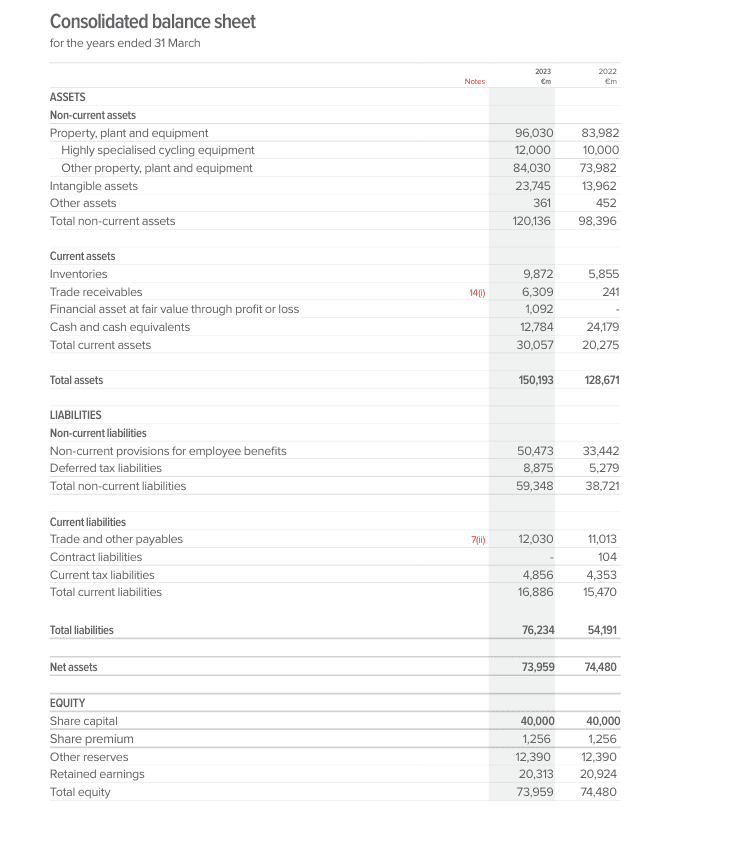
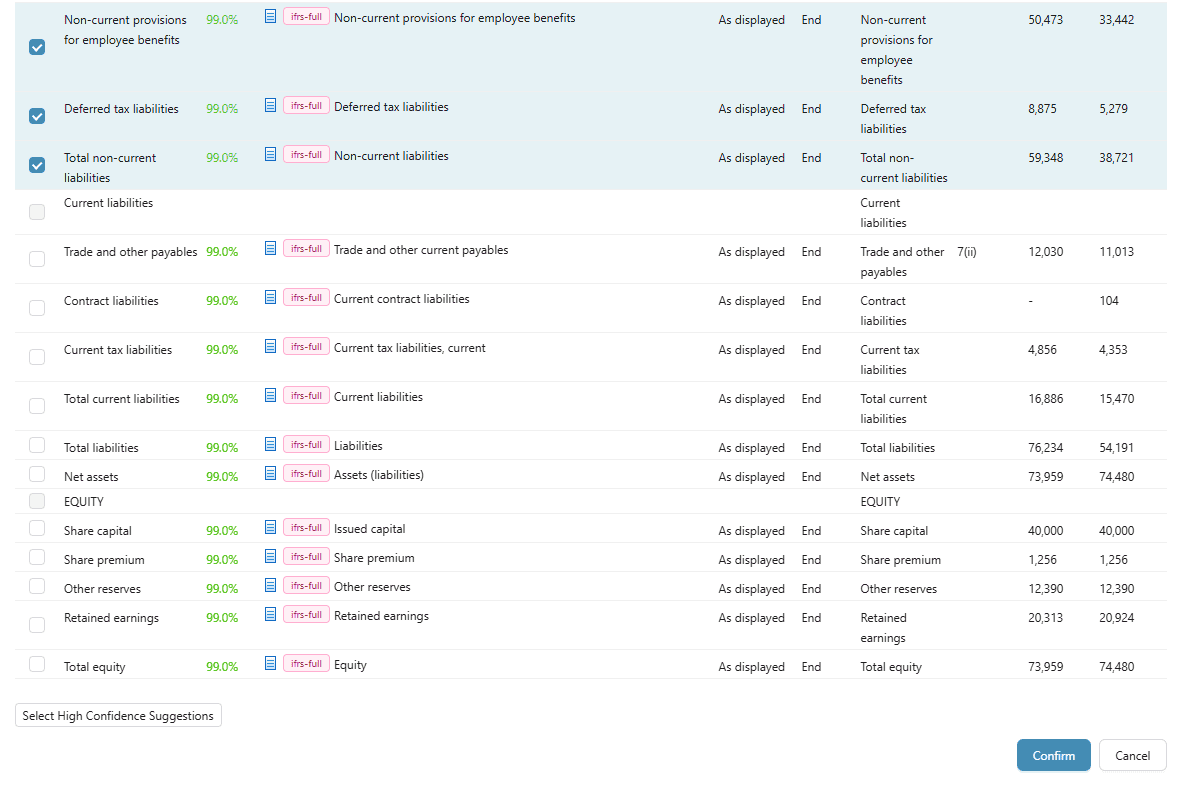
Seahorse’s AI-generated tags with confidence rankings.
Reducing Error and Compliance Risk
Less manual work can remove common sources of error such as rekeyed figures, inconsistent mappings and accidental omissions, while also reducing compliance risks. With non-compliance impacts in the millions for large organizations, this is a high value outcome.
However, AI also introduces its own risks. A plausible-looking suggestion may still use the wrong concept, and a generative model can produce an answer that has no basis in the source data.
A safer workflow combines different controls. AI handles recommendations and pattern recognition, the filer reviews material decisions, and deterministic validation checks the final report against the taxonomy and filing rules.
That keeps responsibility clear. The software can narrow the search and surface likely problems, while the person responsible for the filing still decides what the reported information means. This human-in-the-loop approach is important for regulatory reporting where personal accountability is involved.
How AI Is Changing the Role of Auditors
Auditors face a similar shift. AI can process more information and draw attention to unusual items, but the resulting output still has to fit within the same evidence, documentation and professional judgement requirements.
AI-Assisted Anomaly Detection and Risk Analysis
Traditional analytical procedures often begin with known risk indicators or predefined tests. AI can add another layer by looking for patterns across much larger datasets.
Structured XBRL data makes that easier because facts from multiple periods or entities already carry consistent identifiers and context. Models can compare movements, relationships and disclosures without first extracting every figure from a document.
The result is useful for prioritisation and decision-making in audit review, and it can help auditors assess risk exposure across larger datasets. An unexpected relationship between two facts, an unusual disclosure pattern or a change that differs from comparable companies can direct the auditor towards an area that deserves more work.
That does not make the anomaly evidence of an error. It gives the audit team another way to decide where human attention is most valuable.
Faster Review Cycles, Same Governance Standards
It has been made clear by audit authorities that greater automation does not reduce the auditor’s responsibility for the conclusion.
The FRC issued guidance on generative and agentic AI in audit in March 2026, with a particular focus on risks to audit quality, appropriate mitigations and the professional judgement required when auditors rely on AI-enabled tools.
The IAASB has taken a similar direction. Its work on technology and quality management found that existing quality-management standards remain a strong foundation for AI-enabled engagements, while firms may need additional practical guidance as the tools become more complex.
Faster analysis can shorten parts of the review cycle. The evidence behind the conclusion still needs to be understood, documented and defensible, with enough governance records to respond to regulatory inquiries about AI-enabled review processes.
How AI Is Changing the Role of Software Vendors
Reporting platforms increasingly have to combine deterministic regulatory logic with AI-assisted workflows. Users expect software to do more than display a taxonomy or return a list of validation errors.
Embedding Machine Learning Models into Tagging Platforms
Tag selection is well suited to advanced AI models because the model can learn from large numbers of previous decisions and present likely concepts to the preparer.
CoreFiling’s Seahorse uses this approach to great effect. The automated tag-selection engine learns from previous filings, while the current AI assistant can suggest concepts for selected disclosures and show a confidence score for each recommendation.
That changes the tagging experience. The user can start with a tagged document, ready for review, instead of searching the full taxonomy manually. They can focus their efforts on higher value tasks, such as handling company-specific disclosures and suggestions where confidence is low.
The same principle can extend to mapping, document review and other repetitive parts of regulatory software.
Balancing Automation with Human Oversight
Choosing an XBRL tag is not a simple task, with millions of possible combinations of tag and breakdowns available in the taxonomy. The tag tells systems and users what the information means, so AI assistance should fit into existing systems rather than disrupt controlled reporting workflows.
CoreFiling therefore treats AI assistance as part of the tagging workflow while keeping the final decision with the preparer. This reflects the view that the entire regulatory data flow should be efficient and that that removing preparer judgement would transfer interpretation risk to downstream consumers and weaken the value of structured reporting.
That is a useful design principle for compliance processes more broadly. AI can recommend, explain and prioritise. Hard filing rules can remain deterministic, and material judgement stays with the person accountable for the report.
How AI Is Changing the Role of Data Collectors and Aggregators
Once data reaches a regulator, registry or commercial aggregator, the scale of the problem changes. Thousands or millions of filings may need to be validated, normalised and moved into downstream systems before analysts can use them.
Automating Data Aggregation Across Jurisdictions
XBRL makes aggregation easier, but data collection and aggregation still becomes more complex across jurisdictions, and it cannot make every reporting regime identical. Different jurisdictions can use different taxonomies, extensions and reporting definitions.
AI can assist with the semantic work between those systems, including analyzing data from different regimes before controlled mappings are approved. A model can propose relationships between similar concepts, identify inconsistent classifications and help analysts find where two regimes describe the same underlying information differently.
Those suggestions still need a controlled mapping layer. Once approved, the mapping should remain repeatable so every new filing follows the same route into the data warehouse or analytical system.
CoreFiling’s True North platform takes this approach to regulatory data infrastructure. Collected data can be mapped into warehouses, staged for ETL and exposed through APIs, while the taxonomy provides the definitions and business rules behind the collection.
Data Lineage and Traceability at Scale
AI makes provenance more important because it introduces a decision point between the source data and the final output.
Organizations with AI in their data pipelines should be able to trace a figure back through the process. With XBRL, the original source is clear, the XBRL facts, linked to the XBRL taxonomy concept are explicitly defined in each companies filing.
Where AI contributes a suggestion or analysis, teams also need enough information to understand how that output entered the workflow and who approved the decision that followed.
XBRL helps by preserving explicit definitions and context around each reported fact. A well-governed platform can then maintain the versions, mappings and review history around that data.
Without that lineage even good results may be useless because they cannot be understood and defended.
How Regulators Are Using AI for Analytics and Oversight
Regulators already receive far more data than supervisory teams can inspect manually. Against a tougher regulatory landscape, AI gives them another way to prioritise that information, especially when the data arrives in a consistent machine-readable form.
It has been reporting that in 2024, global regulators imposed $19.3 billion in penalties, while ESG-related enforcement actions increased by 98% globally and anti-money laundering fines increased by 87% to $113.2 million. Corporate oversight is required and AI can enable more focussed case selection and management.
Real-Time Monitoring and Suspicious Activity Detection
“Real-time” depends on how often the underlying information is reported. An annual XBRL filing remains annual, regardless of how quickly AI can analyse it.
For higher-frequency collections, however, automated processing can reduce the time between receipt and supervisory action. A model can examine incoming data, compare it with previous submissions and surface unusual movements or patterns for review as soon as the information enters the system, helping regulators detect suspicious patterns tied to financial crimes sooner.
Regulators are actively building these capabilities. The FCA’s 2026/27 programme includes AI in regulatory workflows to detect harm and speed decisions, as well as generative AI to review documents received from firms. ESMA’s 2026 programme also includes the development of AI-powered supervisory tools for more data-driven supervision.
AI therefore works well as a triage layer, especially where supervisory teams need to decide which firms, transactions or disclosures deserve attention first, supporting faster responses to regulatory breaches.
Regulatory Analytics on Filed Data
Structured filings also support deeper analysis after submission.
The SEC already uses machine-readable disclosure data across internal applications for risk assessment, rulemaking and enforcement. Its 2026 report notes that machine-readable formats let staff analyse large quantities of information that would be far harder to process manually.
AI expands what analysts can ask of that dataset. Numerical models can identify unusual movements across thousands of issuers, while LLMs can analyse tagged narrative disclosures for common themes, changes in tone or outliers, helping teams adapt more quickly to regulatory changes.
The quality of those results still depends on the filing layer underneath them. Consistent tags, clear taxonomy definitions and validated data give the analytical model a reliable set of facts to work from while supporting compliance with regulatory expectations.
The Core Challenges of AI in Regulatory Reporting
Regulatory reporting has a much lower tolerance for uncertain outputs than many other AI use cases. Efficiency matters, but a filing or decision must also be reproducible, explainable and owned by somebody who can defend it.
The “Black-Box” Problem: Auditability vs. Probabilistic Outputs
A deterministic validation rule is easy to reproduce. Give it the same filing and the same rule set, and it should return the same result.
An AI model works differently. The output may depend on training data, prompts, model configuration and probability. A confident answer can still be wrong.
That does not make AI unsuitable for regulatory reporting. It changes where the technology belongs in the workflow.
Tag suggestions, anomaly detection, document classification and first-draft commentary can tolerate a recommendation that a person reviews. A hard filing requirement needs a reliable rule that can be rerun and explained.
The strongest reporting systems therefore combine both. AI handles areas where prediction or pattern recognition adds value, while deterministic rules protect the parts of the process where compliance requires a definitive answer. Governance around accurate reporting is under increased scrutiny which makes explainable controls and maintaining compliance more important.
Legacy Data Barriers and Data Quality Risks
AI cannot compensate for every weakness upstream.
Across the wider compliance landscape, many organisations still prepare regulatory reports from fragmented systems, inconsistent master data and spreadsheets that have evolved over years. The FRC’s 2026 research identified underlying data quality as one of the barriers to wider AI adoption in corporate reporting.
A machine-readable filing can still contain the wrong number. A perfectly selected XBRL tag can still point to a figure that came from an incorrect source.
Before organisations automate more of the reporting process, they need to understand where each required fact originates, how it moves through the reporting stack and which controls apply along the way.
AI becomes much more useful once that foundation is reliable.
Evolving Rules: The EU AI Act and Risk-Based Governance
The EU AI Act adds another governance layer for organisations that develop or deploy AI.
Most of the Act became applicable on 2 August 2026, including transparency obligations for certain AI systems. The high-risk requirements follow later, with Annex III systems due to come into scope from 2 December 2027 after the 2026 Digital Omnibus on AI changes.
An AI tool used in regulatory reporting does not automatically qualify as a high-risk system. Classification depends on its intended purpose and whether it falls within the categories defined by the Act and the exact implementation of rules, such as the requirement to declare AI generated content, to statutory or regulatory reporting is not yet clear.
The wider governance principles are still relevant to reporting teams. Organisations need to understand where AI enters the process, what information it uses, who reviews its output and how decisions can be traced.
Those controls also make sense outside the scope of any specific AI Act obligation. AI used in reporting must also adhere to data protection regulations like GDPR. U.S. businesses incur an average cost of $10,000 per employee for compliance, which reinforces the need for governed adoption under evolving regulatory requirements.
What This Means for the Future of XBRL and Reporting
AI gives companies and regulators new ways to use reported information, but those tools become more powerful when the data arrives with clear definitions and reliable structure.
That direction is already influencing the XBRL standard itself.
Toward AI-Ready Filing Pipelines
An AI-ready reporting pipeline starts well before the model.
Source systems provide the underlying data. The reporting model gives that data a defined meaning. XBRL carries the facts and context, validation checks the filing against known rules, and AI capabilities can then support downstream analysis, validation support, and exception handling in a governed pipeline.
XBRL International is now working on the next generation of the standard with AI consumption explicitly in mind. The first Public Working Draft of Project Tavi appeared in September 2026. The proposed model uses a simpler structure, currently represented in JSON, so ordinary development tools and general-purpose AI systems, including AI tools, can work more easily with both reports and their taxonomies.
Concepts, dimensions and data constraints remain part of the model because they carry the meaning of the report. Existing XBRL 2.1 infrastructure also remains supported, with no mandatory migration timetable.
How CoreFiling and Seahorse Are Building for This Shift
CoreFiling already uses machine learning where it can remove repetitive work and lower operational costs without taking the final reporting judgement away from the user.
Seahorse’s AI-assisted tagging can recommend concepts and provide confidence scores, while automated conversion, roll-forward and validation handle other parts of report production. Preparers can review, refine or reject the suggested tags before filing.
The True North Data Platform covers the wider structured-data workflow, from taxonomy management and report creation through validation, collection and downstream processing. That gives AI a governed data layer to work with instead of treating each filing as an isolated document.
CoreFiling has also identified broader AI functionality as an active area of Seahorse development. Its position remains centred on assisted workflows, high-quality structured data and user ownership of reporting decisions, an approach that can become a competitive advantage by strengthening operational resilience for reporting teams.
Frequently Asked Questions
What is AI regulatory compliance?
AI regulatory compliance can refer to both compliance with rules that govern AI systems and the use of AI to support regulatory compliance.
In reporting, AI can support compliance teams and compliance officers with tasks such as data mapping, tag selection, anomaly detection, document review and narrative preparation, helping organizations meet compliance requirements. The organisation still needs controls around data quality, validation, human review and accountability for the final filing.
What is an example of AI in regulatory reporting?
AI-assisted XBRL tagging is one practical example. A machine-learning model can analyse a disclosure and suggest the taxonomy concept most likely to fit it, which saves the preparer from searching thousands of possible tags manually.
CoreFiling’s Seahorse uses this approach and gives each suggestion a confidence score. Similar review-and-approval workflows are also used to support suspicious activity reports in anti-money laundering contexts. The preparer then accepts, changes or rejects the recommendation before the filing is completed.
Which AI approach is best for regulatory compliance?
A combined approach works best because regulatory reporting contains several different types of work across risk management and regulatory compliance.
Machine learning is useful for classification, mapping and anomaly detection, and it complements traditional rule based systems rather than replacing them. Generative AI can help with narrative drafts, explanations and natural-language analysis. Deterministic rules remain better suited to formal validation, while people retain responsibility for material judgements and final approval.
The aim is to use AI where prediction saves time without turning a probabilistic output into the final authority on whether a filing is correct, while also helping organizations in transforming regulatory reporting.